
The One Piece Card Game Enters a New Era: Understanding the 2026 Rotation
The One Piece Card Game is officially entering its next phase. Starting April 1, 2026, Bandai is introducing the game’s first-ever set rotation system, fundamentally changing how competitive play works.
If you’re a player, collector, or store owner, this is one of the most important updates since the game launched.
What Is Rotation in the One Piece Card Game?
Rotation is a system that limits which cards are legal in competitive play. Instead of every card ever printed being usable, only recent sets are allowed in the main format.
Beginning in April 2026, the game will use a Block Number system, where each card is assigned a “block” based on when it was released.
- Each “block” represents a group of sets (typically 4 main sets)
- Only a selection of the most recent blocks will be legal in Standard play
- Older blocks will rotate out each year
This keeps the game fresh, balanced, and easier for new players to enter.
 These are the icons are cards you will need to look for, the devil fruit shows what numbers belong to what block.
What’s Rotating Out?
With the first rotation:
- Block 1 (OP01–OP04) is no longer legal in Standard format
- This removes a large chunk of early staples and foundational cards
- Over time, each April will remove the oldest remaining block
From April 2026 onward, Standard format will generally include about three years of cards (roughly 4 blocks at a time)
New Formats: Standard vs Extra
To support both competitive balance and player freedom, the game now has two main formats:
Standard Regulation (Competitive Format)
- Uses the rotation system
- Only recent blocks are legal
- Designed for balanced, evolving meta gameplay
Extra Regulation (Eternal Format)
- All cards are legal (with banlist exceptions)
- Lets players use older favorites and legacy decks
- Ideal for casual play and special events
This split ensures that no cards truly become “useless.”
How Block Rotation Works Going Forward
Rotation isn’t a one-time change—it’s ongoing.
- April 2026: Blocks 2–5 are legal
- April 2027: Blocks 3–6 become legal
- And so on…
Each year:
- The oldest block rotates out
- A new block rotates in
This creates a constantly shifting competitive environment.
Important Exceptions to Know
Rotation isn’t as simple as “old cards are gone.” There are a few key exceptions:
- Reprints can keep cards legal if they receive updated block numbers
- Some special rarity cards (like Super Parallel cards) may remain legal regardless of block
- Certain cards may be adjusted through banlists alongside rotation
This means some fan-favorite effects may still stick around in new forms.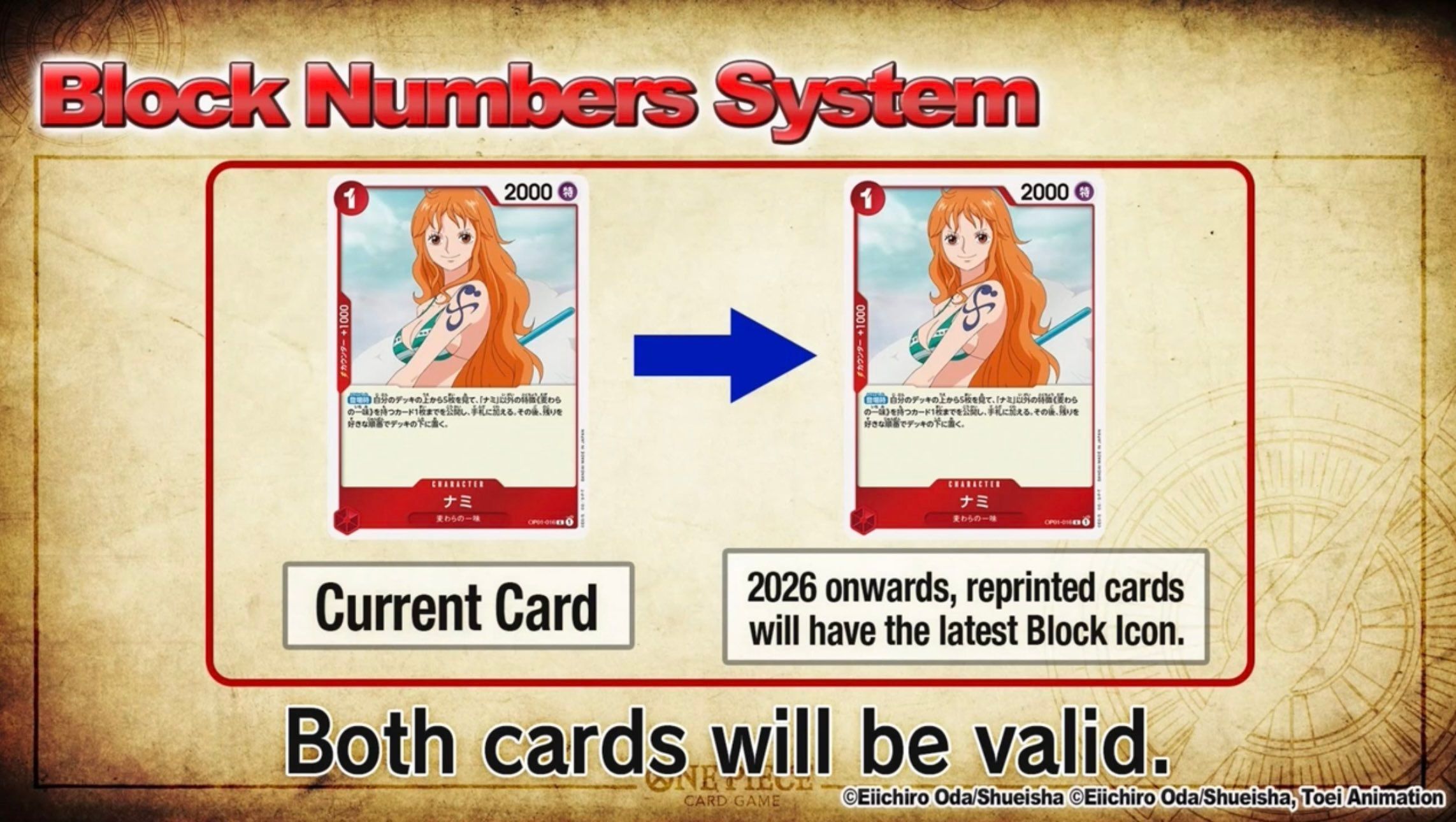
Why Bandai Introduced Rotation
The rotation system solves several long-term issues:
- Prevents power creep from stacking indefinitely
- Keeps the meta fresh and evolving
- Lowers entry barriers for new players
- Improves game balance without relying only on bans
In short, it ensures the game stays healthy for years to come.
What This Means for Players
Rotation will have a big impact on how you play and build decks:
- Competitive players must adapt to a smaller card pool
- Older decks may need rebuilding or replacement
- New strategies and leaders will rise quickly
- Deck building becomes more focused and accessible
It’s a reset—but also a huge opportunity.
Final Thoughts
The 2026 rotation marks a turning point for the One Piece Card Game. With the introduction of block rotation and dual formats, Bandai is setting the foundation for a long-lasting competitive scene.
For some players, it’s the end of an era.
For others, it’s the start of a brand-new adventure.
Either way—the Grand Line just got a lot more interesting.